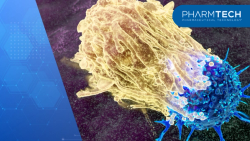
“The manufacturing complexities can have a significant impact to patient access to these therapies. Whether that's from the perspective of the patient cell collection, manufacturing, or patient access, the extended time to treatment for autologous cell therapies can impact patients’ ability to be treated with these therapies.”

CONTINUE TO SITE
OR WAIT null SECS
Advertisement
- About Us
- Advertise
- Contact Us
- Editorial Info
- Editorial Advisory Board
- Do Not Sell My Personal Information
- Privacy Policy
- Terms and Conditions
© 2026 MJH Life Sciences™ , Pharmaceutical Technology - Pharma News and Development Insights. All rights reserved.
Addressing Manufacturing and Access Barriers in Advanced Therapeutics
Published on:
Feliza Mirasol
Pharmaceutical Technology, Trends in Manufacturing eBook May 2026, Volume 50,
AI and PAT have been shown to reduce manufacturing variability in advanced therapies, which leads to improved process control and accelerated patient access to lifesaving treatments.
Editor’s note: this article was originally published on BioPharmInternational.com.
The modern landscape for biotherapeutics is undergoing a paradigm shift as advanced therapeutic modalities, such as cell and gene therapies, move from experimental stages to commercial availability. Unlike traditional biopharmaceuticals, these next-generation treatments require specialized manufacturing frameworks to ensure both biological quality and timely clinical availability. The complexity inherent in producing these therapies often leads to process unpredictability and operational hurdles that can significantly delay patient access to lifesaving treatments.1,2
To address these challenges, the industry is increasingly looking toward the integration of advanced analytical tools and artificial intelligence (AI) to facilitate more robust control and enhance overall manufacturing efficiency.3 Streamlining these intricate workflows is not merely a matter of technical interest but a necessity for managing the critical timelines associated with complex biologics. By focusing on supply chain reliability and clinical delivery, stakeholders can bridge the gap between scientific innovation and patient care.4
How does process unpredictability in manufacturing impact patient access to advanced therapies?
One of the most significant barriers to the success of advanced therapies is the inherent complexity in the manufacturing process, which involves a significant amount of coordination between the patient, the treatment site, and manufacturers. In addition, there is variability between different products’ manufacturing processes, which is an administrative burden for the sites to handle as well as knowing all the different processes, says Anna Catalanotto, director, Advanced Therapy Commercial Strategy, Cardinal Health.
This challenge is particularly true for autologous therapies, for which a patient’s own cells serve as the starting material.5 Manufacturing complexities in this space can create a ripple effect that touches every part of the treatment journey, Catalanotto highlights.
She also emphasizes that these disruptions can have dire consequences for the individual awaiting care. Coverage and access processes that are inconsistent or delayed can lead to unpredictable patient access, which may even cause a patient to abandon their pursuit of treatment entirely, she explains.
The time to manufacture these therapies and uncertainty surrounding when a patient will be ready for administration can create logistical challenges for treatment sites and manufacturers alike, Catalanotto continues. Catalanotto notes that the very ability of a patient to receive therapy is often tied to how well the manufacturer communicates the expected journey and prepares the site for potential deviations.
“The manufacturing complexities can have a significant impact to patient access to these therapies,” Catalanotto says. “Whether that's from the perspective of the patient cell collection, manufacturing, or patient access, the extended time to treatment for autologous cell therapies can impact patients' ability to be treated with these therapies.
Because each product may follow a distinct and complex path to the patient, maintaining clear expectations regarding timelines is vital for commercial success. Beyond the logistics, the industry must recognize that solving these delivery issues is a moral and operational imperative, according to Catalanotto.
“Patient access to these cell and gene and advanced therapies is really crucial for manufacturers to solve,” she stresses.
Advertisement
How can process analytical technologies and AI ensure robust manufacturing control?
To combat the unpredictability in commercial strategists, technical experts are turning to sophisticated digital and analytical solutions. Process analytical technologies (PAT) and AI are no longer futuristic concepts but are currently being utilized to stabilize biomanufacturing operations, says Carrie Mason, head, PAT Center of Excellence, Lonza Integrated Biologics. She explains that these tools allow for a much more nuanced understanding of the data generated during a production run. Whereas traditional manufacturing often relied on "getting a result" and then making a reactive decision, the modern approach uses analytics tied to AI to build a library of information that supports predictive control. This shift allows manufacturers to categorize process characteristics with high precision, driving a philosophy of "right the first time" manufacturing, she notes.
“This high level of control is essential for complex molecules that do not follow the standard production rules of simpler biologics. Furthermore, the speed at which these therapies can be brought to market is directly influenced by the efficiency of these control strategies.”
The synergy between hardware tools and software intelligence is what creates processes capable of meeting strict quality standards, Mason says. “PAT and AI really work hand in hand toward developing a robust process,” she emphasizes. By augmenting PAT tools with AI, manufacturers can enhance their process control strategies to ensure that every batch meets the necessary characteristics for clinical use.
“This high level of control is essential for complex molecules that do not follow the standard production rules of simpler biologics,” Mason states. “Furthermore, the speed at which these therapies can be brought to market is directly influenced by the efficiency of these control strategies. What we are able to do with our PAT tools is augmented with advanced AI technologies in order to enhance process control strategies.”
Ultimately, she explains, the goal is to reach the clinic faster while maintaining a robust manner of production that minimizes the risk of batch failure.
Why is multidisciplinary collaboration essential for navigating the administrative burdens of advanced therapeutics?
While technical and manufacturing improvements are critical, they exist within a broader ecosystem involving payers and health care providers. Advanced therapies often carry high up-front prices, which can lead to longer review times from insurance payers who may be concerned about the lack of long-term durability data or small clinical trial sizes, Catalanotto notes.
This hesitation manifests as an administrative burden for treatment sites, which must navigate complex health plan requirements. Treatment sites often find themselves conducting single case agreements, which are one-off negotiations for coverage and payment. Such negotiations can be time-consuming and can further delay a patient's time to treatment, Catalanotto explains. She points to this administrative friction as being a significant hurdle that requires proactive education and resources for all stakeholders.
The complexity of these therapies requires a level of collaboration that is rarely seen in traditional medicine, Catalanottoadds. She stresses that manufacturers must prepare to educate payers on evidence gaps and the specific end points used in clinical trials to ensure that the value of the therapy is understood. Similarly, treatment sites need support in managing workflows, storage requirements, and the payor authorization process.
“That upfront collaboration between manufacturers, treatment sites, and payers really is so critical to making sure that the process for getting these patients access to therapies is as smooth and as expedited as possible, and that there is a process in place to get patients access to these therapies,” Catalanotto states. “And all stakeholders involved should have all the resources and education that they need to navigate these processes that, again, are much more complex in the cell and gene therapy space compared to other therapy types.” Without this unified approach, even the most technologically advanced manufacturing process will fail to reach the patient in a timely manner, she cautions.
What role does integrated bioprocessing play in accelerating the delivery of complex molecules to the clinic?
The future of manufacturing lies in the transition away from isolated, individual steps toward a more integrated and automated model, according to Mason. Integrated bioprocessing, comprising a seamless connection of various stages of production, is viewed as the key to adapting to the needs of new modalities.
“As the industry moves toward more complex molecules, the methodologies used to produce them must also evolve to be more adaptive and faster. Advanced analytics and AI provide the necessary data to make this integration possible, allowing for a more streamlined path from the laboratory to the clinical setting,” Mason notes.
By automating these processes, manufacturers can reduce the potential for human error and decrease the time required to move between different stages of the biomanufacturing lifecycle. This evolution is being driven by the very nature of the molecules themselves, which demand more sophisticated handling than their predecessors, Mason says.
“Complex molecules and new modalities are really driving our industry to be adaptive and to drive towards a methodology that's going to get us there faster,” Mason emphasizes. The ultimate goal of this technical evolution is to reach the clinic as quickly as possible, ensuring that the innovations developed in the lab can be translated into tangible benefits for patients.
It is expected that successful delivery of advanced therapies will increasingly depends on a dual strategy that consists of the technical optimization of manufacturing through AI and PAT, and the operational optimization of the commercial ecosystem through collaboration and education. By addressing process unpredictability and administrative burdens simultaneously, the industry can create a more reliable supply chain that fulfills the promise of next-generation medicine. The integration of these disparate elements, from the cleanroom to the payer's office, may ultimately define the success of advanced therapeutic delivery moving forward.
References
- Xie W, Pedrielli G. From discovery to production: challenges and novel methodologies for next generation biomanufacturing (version 2). arXiv. 2022. doi:10.48550/arXiv.2205.03920
- Morrow D, Ussi A, Migliaccio G. Addressing pressing needs in the development of advanced therapies. Front Bioeng Biotechnol. 2017;5:55. doi:10.3389/fbioe.2017.00055
- Rathore AS, Sarin D. What should next-generation analytical platforms for biopharmaceutical production look like? Trends Biotechnol. 2024;42(3):282-292. doi:10.1016/j.tibtech.2023.08.008
- de Bournonville S, Lambrechts T, Pinna T, Papantoniou I, Aerts JM. Streamlining data management & process analytics for the manufacturing of cell & gene therapies. Cell Gene Ther Insights. 2018;4(8):695-704. doi:10.18609/cgti.2018.068
- Lamontagne A, Fesnak A. Limiting variability to achieve reproducibility in cell manufacturing. Cell Gene Ther Insights. 2020;6(10):1357-1363. doi:10.18609/cgti.2020.149